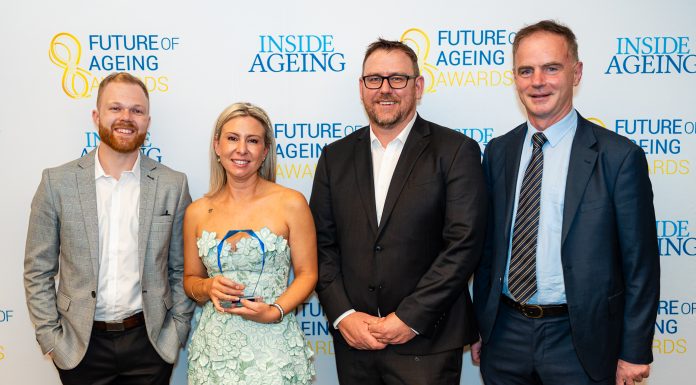


VMCH and the Multicultural Centre for Women’s Health have partnered to deliver culturally responsive women’s health education to more than 700 aged care staff. Delivered in preferred languages, the program has improved health knowledge and confidence, with 96% reporting greater cancer screening confidence and 98% more likely to seek mental health support. It won the People & Culture category in the 2026 Future of Ageing Awards. Results were unveiled at the presentation dinner in Sydney, October 8, 2026. Find the full list of award recipients here…
A culturally responsive women’s health education program developed by VMCH and the Multicultural Centre for Women’s Health (MCWH) is helping aged care employees access vital health information in a safe, familiar environment and in their preferred languages.
Piloted in 2024, the program has expanded to more than half of VMCH’s residential aged care homes, reaching more than 700 staff, with plans to extend into disability services and at-home aged care.
The initiative recognises that supporting aged care workers means looking beyond their professional responsibilities to consider their personal health, wellbeing and cultural needs.
More than 80% of VMCH’s workforce identifies as women, representing 51 countries of birth and 78 languages. Many employees come from migrant and refugee backgrounds and may face language barriers, cultural stigma or limited access to culturally safe health information.
Rather than relying on conventional workplace wellbeing initiatives, VMCH partnered with a specialist community organisation to develop a program shaped by the experiences and preferences of its workforce.
Designed around employees’ needs
The program emerged from consultations with staff in early 2024, when VMCH and MCWH surveyed residential aged care employees about the health topics they wanted to explore and the languages in which they preferred to receive information.
The findings informed a tailored education program aligned with VMCH’s Diversity, Equity and Inclusion Plan, which identifies women’s health and cultural responsiveness as priority areas.
MCWH was selected as a strategic partner because of its specialist expertise and community-led approach. Established in 1978, the not-for-profit organisation works with women from migrant and refugee backgrounds to improve health and wellbeing.
Its trained Bilingual Health Educators combine health knowledge with cultural understanding and lived experience, helping create an environment where participants can ask questions and discuss sensitive subjects without fear of judgement.
The resulting program comprises seven weekly sessions covering menopause and perimenopause, breast and cervical cancer screening, sexual and reproductive health, mental health and healthy relationships, including family violence.
Sessions are delivered onsite at participating VMCH residential aged care homes, during the working day and in participants’ preferred languages.
The approach removes common barriers to participation, including travel, time constraints and unfamiliar clinical settings. Interactive, conversational sessions encourage discussion, respect lived experience and allow participants to explore topics that may not otherwise be openly discussed.
From two pilot sites to organisation-wide expansion
The program began at VMCH’s Wantirna and Providence residential aged care homes in 2024, with participation and interest exceeding expectations.
Positive feedback prompted expansion in 2025 to additional sites, including Star of the Sea in Torquay, Willowbrooke in Ferntree Gully and John R Hannah in Mulgrave.
In 2026, VMCH and MCWH formalised their partnership through an agreement committing to two rounds of programs per six-month cycle. Each round includes at least two seven-week programs across selected sites.
The first 2026 round commenced on 20 April across three sites, delivering 42 sessions. Further expansion has included O’Neill House in Prahran, Bundoora and Shanagolden in Pakenham.
The program has now reached more than 680 staff across metropolitan and regional Victoria, with nomination materials reporting participation exceeding 700 in a separate evaluation section.
Its reach has also extended beyond the education sessions. MCWH was invited to participate in VMCH’s 2026 International Women’s Day panel discussion, which attracted 330 online attendees from across the organisation.
Measurable improvements in health knowledge and confidence
Evaluation is embedded in the program, with MCWH’s Bilingual Health Educators collecting quantitative and qualitative feedback at the conclusion of sessions. Program summaries inform quarterly meetings between the partners, allowing them to review outcomes and adjust delivery, scheduling, venues, language and promotion.
Following the initial pilot, evaluation findings indicated increased staff understanding of key women’s health topics, including menopause, cancer screening, mental health and sexual and reproductive health.
Among the reported outcomes:
- 96% of participants said their confidence in cancer screening knowledge had increased.
- 98% indicated they were likely or very likely to seek support from a health professional for their mental health and wellbeing following the sessions.
Participant feedback also suggests the education is translating into practical action.
“I learnt that mental health needs to be looked after just like physical health,” one participant said.
Another planned to book an appointment with their GP to help manage menopause symptoms, while a third wanted to share the information with their grandchildren.
These responses highlight the program’s potential to help staff recognise health concerns, seek appropriate support and make more informed decisions about their wellbeing.
“Womens Health for staff is so unique and important.”
2026 Future of Ageing Awards judge
Benefits that extend beyond the workplace
One of the program’s distinctive features is its reported ripple effect within families and communities.
Following the pilot, participants told VMCH they intended to share what they had learnt with extended family members. By the third rollout in 2025, staff were reporting that they were prioritising aspects of their health they had only recently learnt about and passing information on to friends and relatives.
This extends the initiative’s potential impact beyond workforce wellbeing, contributing to greater access to health knowledge among women from migrant and refugee backgrounds.
For VMCH, the program also represents an investment in employee experience. By providing relevant health education during working hours, in accessible settings and in preferred languages, the organisation demonstrates that staff are valued as individuals with health and wellbeing needs beyond their roles.
While the program has not established a direct causal link to improved staff retention, the consistently positive feedback and demand for further sessions indicate strong employee interest.

A sustainable model for the aged care sector
The partnership has been designed to be practical, sustainable and scalable – a key criteria of the Future of Ageing awards program.
MCWH delivers the education through its funded community health programs, while VMCH’s contribution centres on providing venues, promoting sessions internally and coordinating with site leaders. Staff participate at no cost.
This arrangement reduces the financial and logistical barriers that can prevent organisations from introducing targeted wellbeing initiatives.
The model could be adapted by other aged care providers seeking to support culturally and linguistically diverse workforces, working with MCWH or comparable specialist community health organisations.
VMCH’s expansion from two pilot sites in 2024 to more than half of its residential aged care homes demonstrates how a consultation-led initiative can develop into an established organisational program.
With plans to extend delivery into disability services and at-home aged care, the partnership offers a practical example of how aged care employers can build a more inclusive workplace by listening to employees, responding to their lived experiences and making wellbeing support accessible.
The VMCH–MCWH partnership demonstrates how culturally responsive, employee-informed health education can strengthen workforce wellbeing, improve health knowledge and extend benefits into the wider community, while offering a model other aged care providers could adapt to their own workforces.